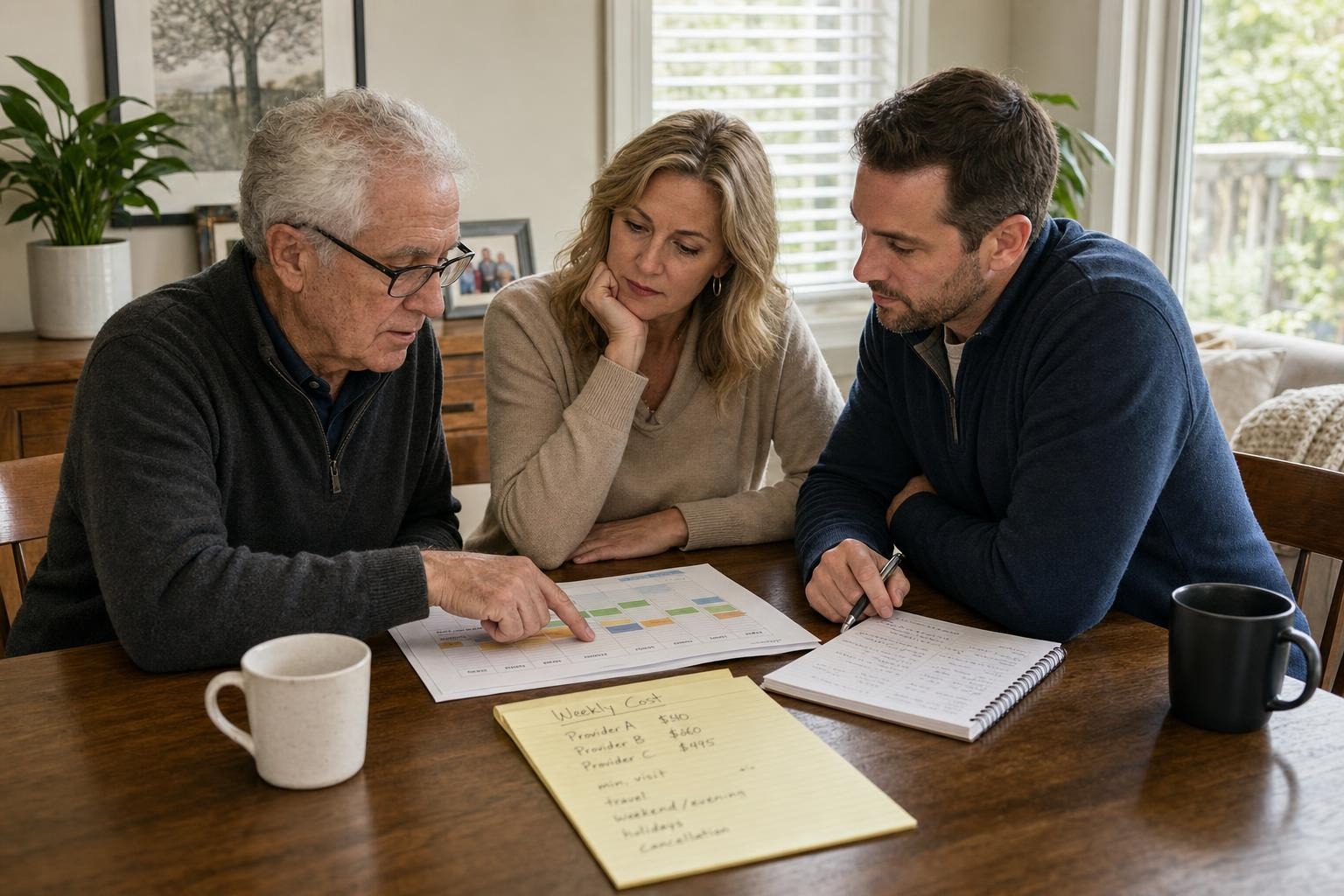

Finding suitable help at home starts with a specific question: what would make everyday life safer, easier, or more manageable for the older adult and the family supporting them? The answer may involve companionship, household routines, supervision, or another form of non-clinical assistance. It should not begin with a vague label or a long directory of profiles.
For families in Hamilton, followed by Burlington, Oakville, and St. Catharines, local availability matters—but location alone is not enough. A sound arrangement must also fit the person’s routine, preferences, home environment, and changing needs. Families should understand who coordinates the support, what is and is not included, how concerns are handled, and whether the arrangement can be reviewed over time.
Non-medical assistance is not a substitute for assessment or treatment by a regulated health professional. If the situation involves new symptoms, medication questions, falls, urgent safety concerns, or a significant change in physical or cognitive health, seek guidance from an appropriate health professional. Ontario residents can also consult the provincial information on home and community care and use Health811 for non-emergency health information.
Key takeaways
- Define the day-to-day problem before comparing providers or proposed schedules.
- Confirm in writing what support is included, excluded, coordinated, and reviewed.
- Look beyond postal coverage to assess timing, continuity, travel realities, and local coordination.
- Include the older adult in decisions wherever possible, especially around routines, privacy, and personal fit.
- Reassess the arrangement when needs, health, behaviour, or family availability change.
What non-medical support at home means
Non-medical support is practical help that does not replace clinical care. Its purpose is generally to make ordinary life at home more manageable and to reduce some of the pressure carried by relatives, friends, and neighbours.
The exact activities can differ among providers and individual arrangements. Rather than assuming a phrase such as “home support” includes a particular task, ask for a plain-language explanation of what the proposed person may do, what they will not do, and what requires another professional or service.
A useful distinction is between day-to-day support and health care. A person might need help maintaining a comfortable routine while also receiving nursing, rehabilitation, primary care, or other clinical services through a separate channel. Those needs can exist at the same time, but they should not be treated as interchangeable.
For example, a daughter may notice that her father is increasingly isolated after giving up driving. The immediate concern could be regular social contact and a more dependable weekly routine. If he also reports sudden dizziness or has fallen, however, that change requires appropriate health assessment rather than being handled only as a need for more household support.
Families should also avoid treating “non-medical” as meaning informal or unimportant. The person providing support may enter a private home, learn household routines, and spend time with someone who could be vulnerable. Clear expectations, reliable coordination, respectful conduct, and a process for raising concerns are therefore central to the decision.
Start with the need, not the service label

Before contacting a provider, describe what is happening in concrete terms. “Mom needs help” is understandable, but it does not give a coordinator enough information to explore a suitable arrangement. A stronger description might be: “She manages mornings well, but evenings have become difficult. She misses meals, feels lonely after dark, and my brother and I cannot visit consistently during the week.”
A brief needs outline can cover five areas:
- Daily pressure points: Identify the times, routines, or situations that are becoming difficult.
- Current supports: Note what the older adult still manages independently and what relatives, neighbours, community programs, or health services already provide.
- Personal preferences: Record language, communication style, household customs, privacy expectations, and any strong likes or dislikes.
- Family limits: Be honest about what relatives can provide consistently rather than building a plan around availability that may not last.
- Warning signs: Separate practical difficulties from symptoms or safety changes that should be discussed with a qualified professional.
This exercise helps prevent overbroad arrangements. It also respects the older adult’s abilities. Support should respond to genuine needs without unnecessarily taking over tasks the person wants and is able to continue doing.
Where possible, ask the older adult what would make home feel easier. One person may value conversation and predictability; another may be most concerned about privacy or disruption. A family-created plan can fail if it solves relatives’ scheduling problem while ignoring the preferences of the person receiving support.
Needs may also be connected rather than isolated. Irregular meals, reduced social contact, and difficulty maintaining a weekly rhythm may all contribute to a harder day. A coordinated conversation can help a family consider those concerns together rather than chasing separate labels. Vicaria Care’s reviewed approach reflects this principle: a local care concierge listens to the situation, seeks to understand the needs, and helps arrange non-medical support around everyday life.
Compare local fit across the four communities
A provider may serve several nearby cities, but families should still ask how coverage works where support will actually occur. Hamilton is a large and varied city, and travel between neighbourhoods can affect timing. The same practical question applies in Burlington, Oakville, and St. Catharines: is dependable support realistically available for the requested place and schedule?
Start with the precise address or neighbourhood rather than the city name alone. Then ask:
- Is this area within the regular service coverage?
- Are there limitations related to the requested days or times?
- How is a delay or absence communicated?
- Who coordinates a change in the schedule?
- Would the same contact continue to help the family if needs evolve?
Families coordinating support from another city or province may place more weight on communication and visibility. They should clarify who receives updates, what information can be shared with consent, and how a concern is escalated. Digital tools may make coordination simpler, but they do not replace a knowledgeable person who understands the arrangement.
Local fit also includes familiarity with the person’s ordinary environment. Consider apartment access, building procedures, parking, pets, stairs, and whether someone else lives in the home. These details may seem minor during an initial call, yet they can determine whether an arrangement works smoothly in practice.
Vicaria Care is Hamilton-first and also serves Burlington, Oakville, and St. Catharines. Its approved model combines personal coordination with simple digital tools so families can retain visibility and control. Families should still discuss the particular address, timing, needs, and proposed arrangement rather than assuming that general city coverage guarantees every schedule or request.
Evaluate how the support is arranged
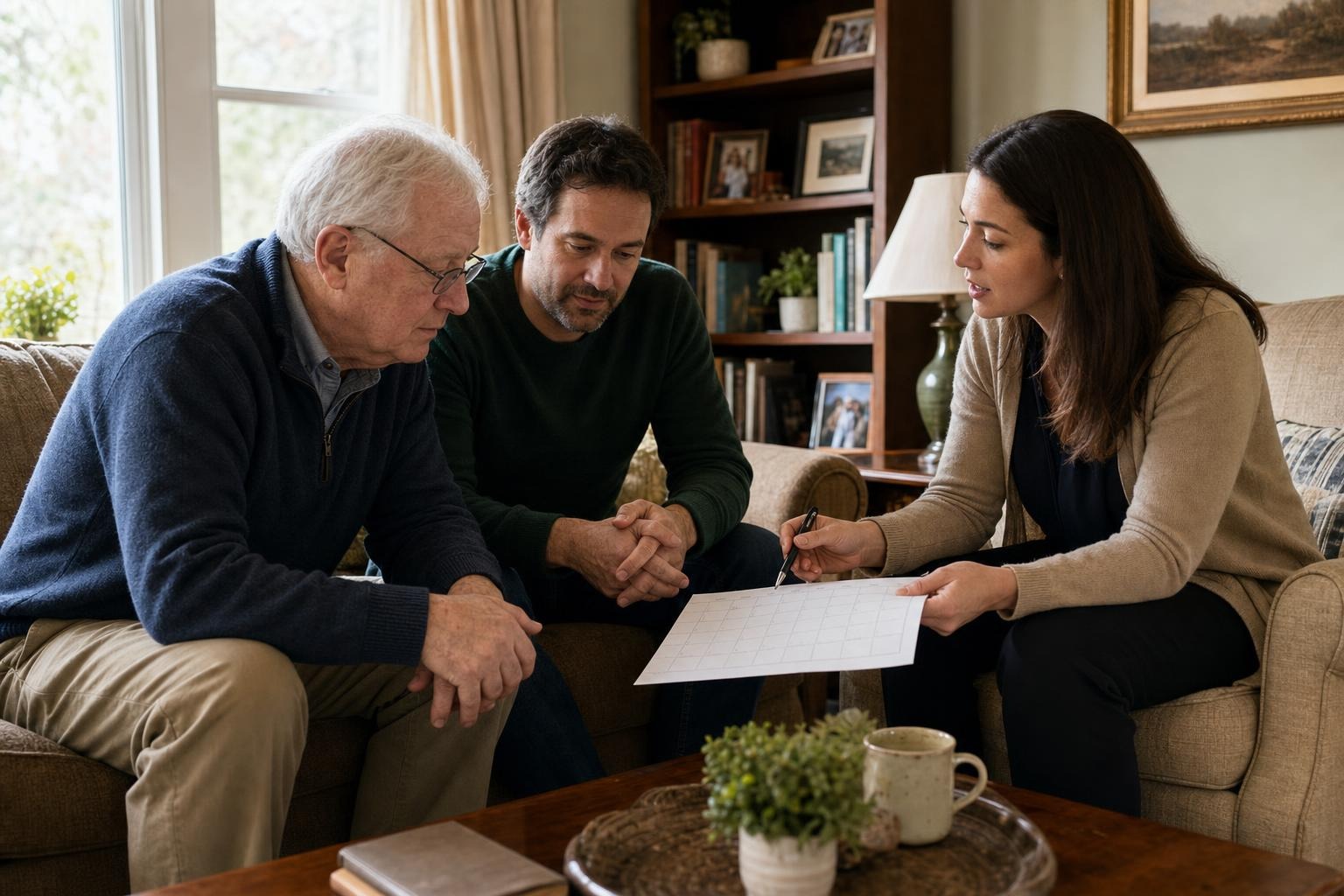
The quality of an arrangement depends on more than the person who comes to the home. Families also need to understand the coordination around that person: who gathers the initial information, how a suitable fit is considered, where questions go, and what happens when circumstances change.
A single knowledgeable point of contact can reduce the administrative burden on a family. Without one, relatives may have to repeat sensitive information to several people or resolve gaps themselves. Ask whether the contact involved at the beginning remains available after support starts and who takes responsibility when that person is unavailable.
Clarify scope and boundaries
Request a clear description of the proposed non-medical support. If your family has a task in mind, ask directly whether it is within scope. Do not rely on assumptions based on experiences with another provider or on a broad service category.
The boundary with clinical work is especially important. Questions about diagnoses, medication administration, wound care, medical devices, rehabilitation, or changing symptoms should be directed to appropriately qualified professionals. A responsible non-medical arrangement should not blur those limits or promise health outcomes.
Ask how personal fit is considered
Compatibility is not simply whether someone is available. The older adult may care about communication style, punctuality, conversation, pace, cultural familiarity, or comfort with household routines. Explain which preferences are essential and which are flexible.
No provider can guarantee that every interpersonal match will be perfect. What matters is whether the family can raise a concern early and whether there is a reasonable process for reviewing the arrangement.
Understand communication and consent
Decide who should participate in planning and receive updates. An older adult capable of making their own decisions should not be sidelined because family members are coordinating logistics. Ask what consent is needed before information is shared and how privacy will be respected in the home.
It can help to name one primary family contact while identifying a backup. This reduces conflicting instructions. Families should also agree on what deserves an immediate phone call, what can wait for a routine update, and what constitutes an emergency requiring 911 or another appropriate service.
Review practical terms
Before support begins, confirm scheduling, costs, cancellation expectations, minimum commitments if any, and the process for requesting changes. These details vary, so they should come from the provider rather than from general online advice. Keep a copy of the agreed terms and ask about anything that remains unclear.
Prepare for the first care conversation
A productive first conversation should give both the family and coordinator a realistic picture of the home situation. Prepare a one-page summary rather than trying to reconstruct everything during the call.
Include the older adult’s preferred name, address, usual routine, important communication needs, current family involvement, and the specific periods when help would make the greatest difference. Mention relevant access information and household considerations, but avoid sharing more sensitive personal or health information than is necessary at an early stage.
Useful questions include:
- Who will be our main point of contact?
- How do you learn about the person’s routine and preferences?
- How will you explain what is within the non-medical scope?
- What happens if the proposed arrangement does not feel like a good fit?
- How are schedule changes and concerns handled?
- When should the support plan be reviewed?
- What should we do if a health or safety concern emerges?
Listen for specific, direct answers. A coordinator should be willing to identify limits rather than imply that every need can be met. Be cautious with guarantees, pressure to decide immediately, or vague answers about responsibilities.
If several relatives are involved, hold a brief family discussion first. Agree on the main concern and appoint one person to lead communication. Differences can still be raised, but the provider should not be expected to resolve longstanding family disagreements.
Most importantly, include the older adult in the conversation in a way that works for them. A direct question such as “What part of the day would you most like to make easier?” can reveal priorities that a checklist misses.
Review the arrangement after support begins
The first plan should be treated as a practical starting point, not a permanent conclusion. Early review allows the family, older adult, and coordinator to identify small problems before they become reasons to abandon support entirely.
Ask whether visits occur as expected, communication is respectful, the agreed activities are understood, and the older adult feels comfortable. Also check whether the timing addresses the original pressure point. A pleasant visit at the wrong time of day may not solve the problem the family set out to address.
Keep observations factual. “The last two arrivals were 20 minutes later than planned, and no one called” is more useful than “This is unreliable.” Similarly, “Dad says conversations feel rushed” provides a clearer basis for discussion than a general complaint about fit.
A review is particularly important after a hospital visit, fall, new diagnosis, change in mobility, noticeable confusion, or major shift in family availability. These events may alter what is appropriate. They may also require assessment from a regulated health professional or coordination with publicly funded services—not simply more non-medical assistance.
Families can learn about publicly funded options through Ontario’s home and community care system. Private non-medical support and public or clinical services may play different roles; one should not be represented as an automatic replacement for another.
Frequently asked questions
How soon should a family start looking for help at home?
Start when recurring pressure points appear, rather than waiting for a crisis. Examples include family visits becoming unsustainable, increasing isolation, or daily routines becoming harder to maintain. Sudden health or safety changes should be addressed through appropriate professional or emergency channels.
Is non-medical support the same as home health care?
No. Non-medical support focuses on practical day-to-day assistance and does not replace nursing, medical assessment, rehabilitation, or other regulated care. Ask each provider to explain its scope clearly because terminology can vary.
Should the older adult participate in choosing support?
Yes, wherever possible. Their preferences about privacy, schedule, communication, household routines, and personal fit are central. Family members may organize logistics, but support is more likely to work when the person receiving it has a meaningful voice.
What if relatives live far from Hamilton or the surrounding cities?
Clarify who will coordinate the arrangement, how updates are shared with consent, and what happens when a local issue arises. One primary family contact and one backup can simplify communication. Technology may improve visibility, but a clear human point of contact remains important.
How can a family tell whether the arrangement is working?
Return to the original need. Is the difficult part of the day becoming more manageable? Does the older adult feel respected? Are visits and communications dependable? Review specific observations with the coordinator and revise the arrangement when appropriate.
When is non-medical assistance not enough?
It is not a substitute for diagnosis, treatment, emergency response, medication advice, or assessment of new symptoms. Contact a qualified health professional when health needs emerge, and call 911 for an emergency. Health811 can provide non-emergency health information and help Ontario residents identify suitable health services.