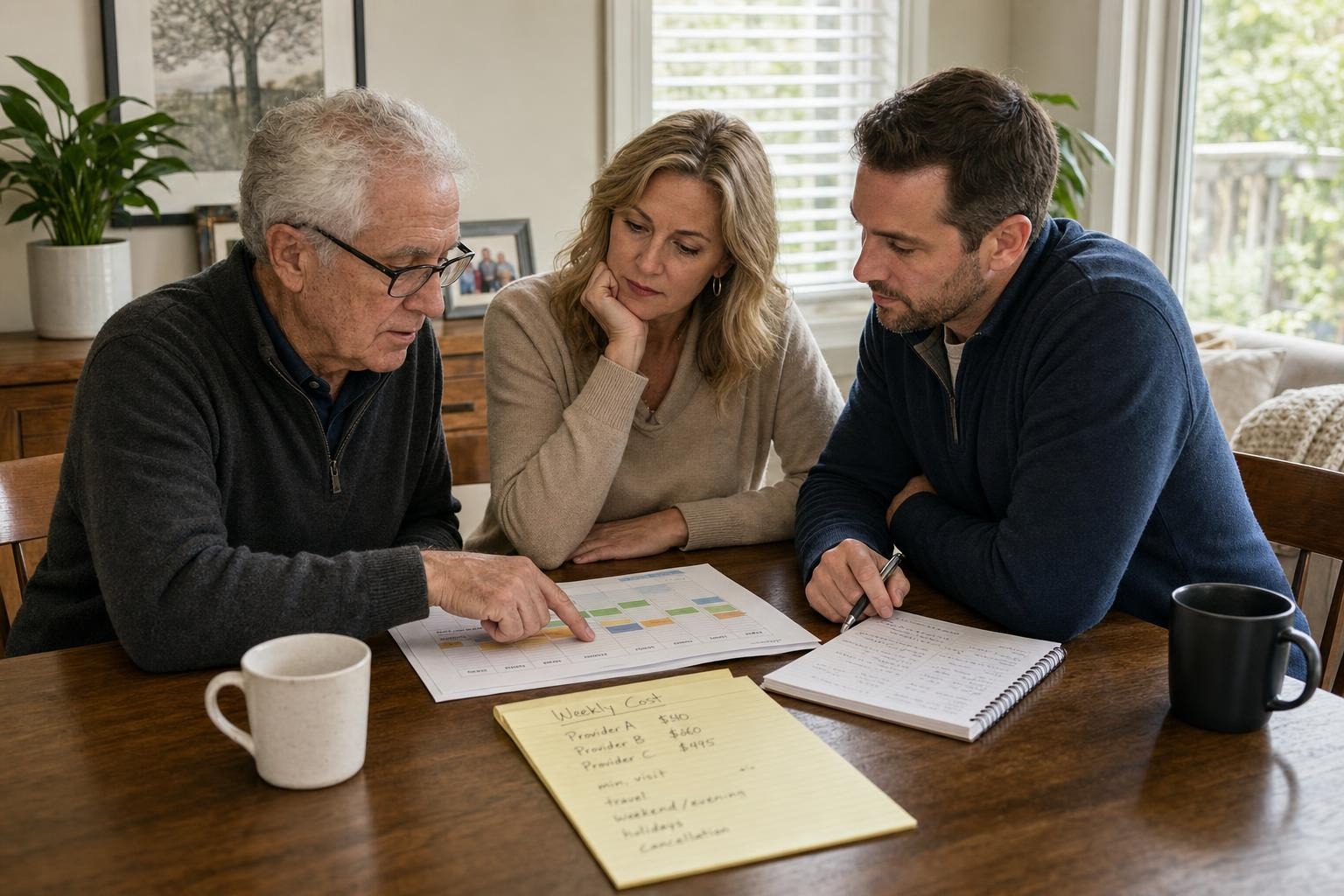

Choosing home help is easier when the family first defines what a good week at home should look like. Write down the practical tasks, preferred schedule, safety concerns, communication expectations, and personal preferences before comparing providers or individual workers. Then verify how support is arranged, who will enter the home, what it costs, and what happens when plans change.
That process matters because “home help” can describe very different arrangements. One family may want companionship and meal preparation twice a week. Another may need regular personal support and light home help. Neither should assume that a provider’s scope, screening process, backup coverage, or supervision works a particular way without asking.
Vicaria Care is Hamilton-first and also serves Burlington, Oakville, and St. Catharines. Its stated approach is personally arranged, non-medical in-home support, with a local care concierge who listens to the family’s situation and helps move the arrangement forward. Regardless of the model being considered, families can use the checks below to make a more informed comparison.
Key takeaways
- Define the actual day-to-day need before discussing schedules or prices.
- Confirm scope, screening, references, supervision, insurance, and backup arrangements rather than relying on broad assurances.
- Ask for complete pricing in writing, including minimum visits, cancellation terms, and possible additional charges.
- Include the older adult in decisions wherever possible and assess personal fit as carefully as task experience.
- Treat new or worsening health concerns as a reason to contact an appropriate health professional, not simply to add more non-medical help.
Start with the need, not a service label
Begin with a one-week snapshot of life at home. Note which activities are difficult, when they happen, and what the older adult already manages independently. A useful description is specific: “prepare lunch, tidy the kitchen afterward, and spend time talking or walking inside the home” is more informative than “general senior care.”
Consider five areas:
- Practical tasks: Companionship, meal preparation, light home help, or personal support.
- Timing: The days, visit length, and time windows that would be most useful.
- Home conditions: Stairs, pets, smoking, building access, parking, or household routines a worker should know.
- Personal preferences: Language, conversation style, cultural practices, food preferences, and comfort with personal support.
- Family communication: Who should receive updates, how often, and what information the older adult has agreed may be shared.
Separate essential needs from preferences. If morning support is essential but a precise arrival time is only preferred, say so. This gives the person arranging care room to find a workable match without overlooking the family’s real priorities.
Consent should remain central. An older adult may be more receptive when the conversation focuses on a concrete goal—such as having energy for a favourite activity or keeping familiar routines—rather than on what they can no longer do. Where the person can participate in the decision, ask what help they want, what they do not want, and what would make a visitor feel welcome rather than intrusive.
Use a 10-point home-help checklist
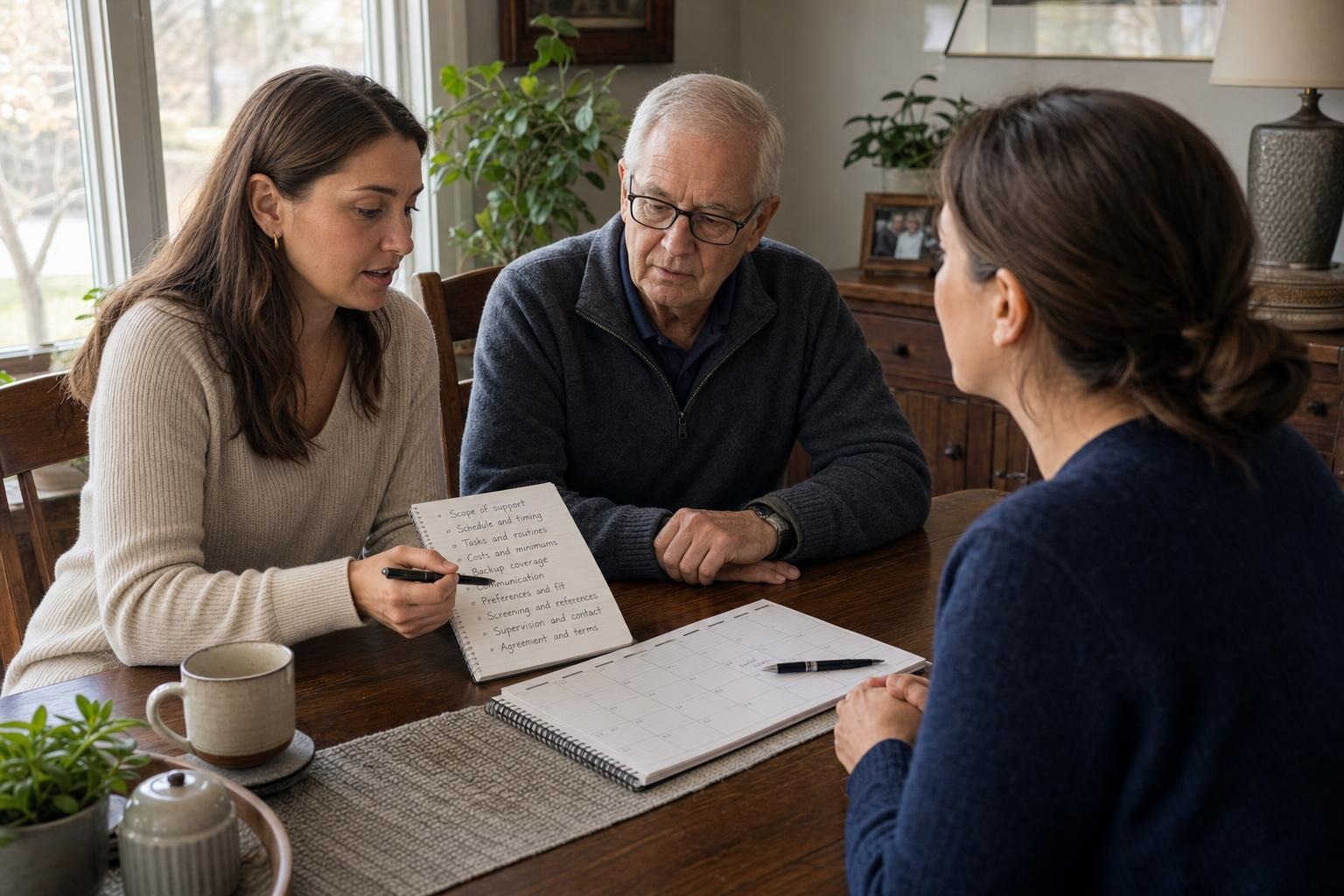
A polished website or friendly phone call does not answer the operational questions that affect care at home. Use the following points in conversations with any provider, coordinator, agency, or independent worker.
| Check | Questions to ask | What a clear answer should cover | |---|---|---| | 1. Scope | Which requested tasks are included, limited, or outside the service? | A task-by-task explanation rather than a general promise to “do everything.” | | 2. Matching | How is the worker selected for this household? Can the family discuss preferences? | Relevant experience, availability, personal fit, and a process for raising concerns. | | 3. Identity and screening | How are identity, work eligibility, references, and background screening checked? | The checks performed, when they were completed, and who reviews them. A screening result is one safeguard, not a guarantee of future conduct. | | 4. Skills and orientation | What preparation is required for the agreed tasks? How are home-specific instructions shared? | A distinction between general experience and orientation to this person’s routines and home. | | 5. Supervision | Who handles questions, performance concerns, or changes in the plan? | A named role or dependable contact process, including response expectations. | | 6. Continuity | Will the same person usually visit? What happens during illness or vacation? | The normal continuity approach, backup options, and whether substitutions require approval. | | 7. Pricing | What is the full rate and what else may be charged? | Minimum visit length, cancellation rules, holiday pricing, taxes where applicable, and any other fees. | | 8. Agreement | What will be documented before visits begin? | Tasks, schedule, price, cancellation terms, privacy expectations, complaint handling, and how service may end. | | 9. Insurance and responsibility | What insurance applies, and who is responsible for the worker arrangement? | A direct explanation appropriate to the model. Families hiring independently may have different responsibilities than families using an organization. | | 10. Records and privacy | What visit information is recorded, who can see it, and how are updates provided? | Consent-based communication and a practical way to correct inaccurate information or change permissions. |
Do not treat one impressive answer as a substitute for the full review. Strong references do not clarify cancellation costs, and a detailed agreement does not prove that a worker is personally compatible with the older adult. The checks work together.
Red flags include vague pricing, pressure to commit immediately, reluctance to explain who will enter the home, promises that exceed a non-medical role, or no clear route for reporting a concern. Another warning sign is a mismatch between spoken assurances and the written agreement. Ask for clarification before the first visit rather than assuming the more favourable interpretation will apply.
Compare different ways of arranging support
Families commonly compare an independently hired worker with support arranged through an organization. Neither structure is automatically right for every household.
Hiring independently may offer direct control over selection and routines. It can also leave the family responsible for more administration, contingency planning, insurance questions, and potentially employment-related obligations. Families considering this route should obtain qualified legal, tax, or insurance guidance about their particular arrangement rather than relying on informal assumptions.
An agency or coordinated model may provide a central contact, matching assistance, documented processes, and possible backup options. The trade-off can include less direct control over staffing or different pricing. These features vary, so ask what is actually included.
Vicaria Care describes its model as a more human way to arrange support: one knowledgeable point of contact helps understand the situation, while simple digital tools help families maintain visibility and control. Families should still discuss the exact tasks, scheduling, worker checks, communication process, pricing, and contingency arrangements that apply to their request.
Publicly funded home and community care is another relevant route for eligible Ontario residents. Information about assessment and access is available from Ontario Health atHome and the Government of Ontario’s home and community care overview. Publicly funded and privately arranged support are not necessarily interchangeable; eligibility, available services, and timing can differ.
Plan the first visit and review the fit
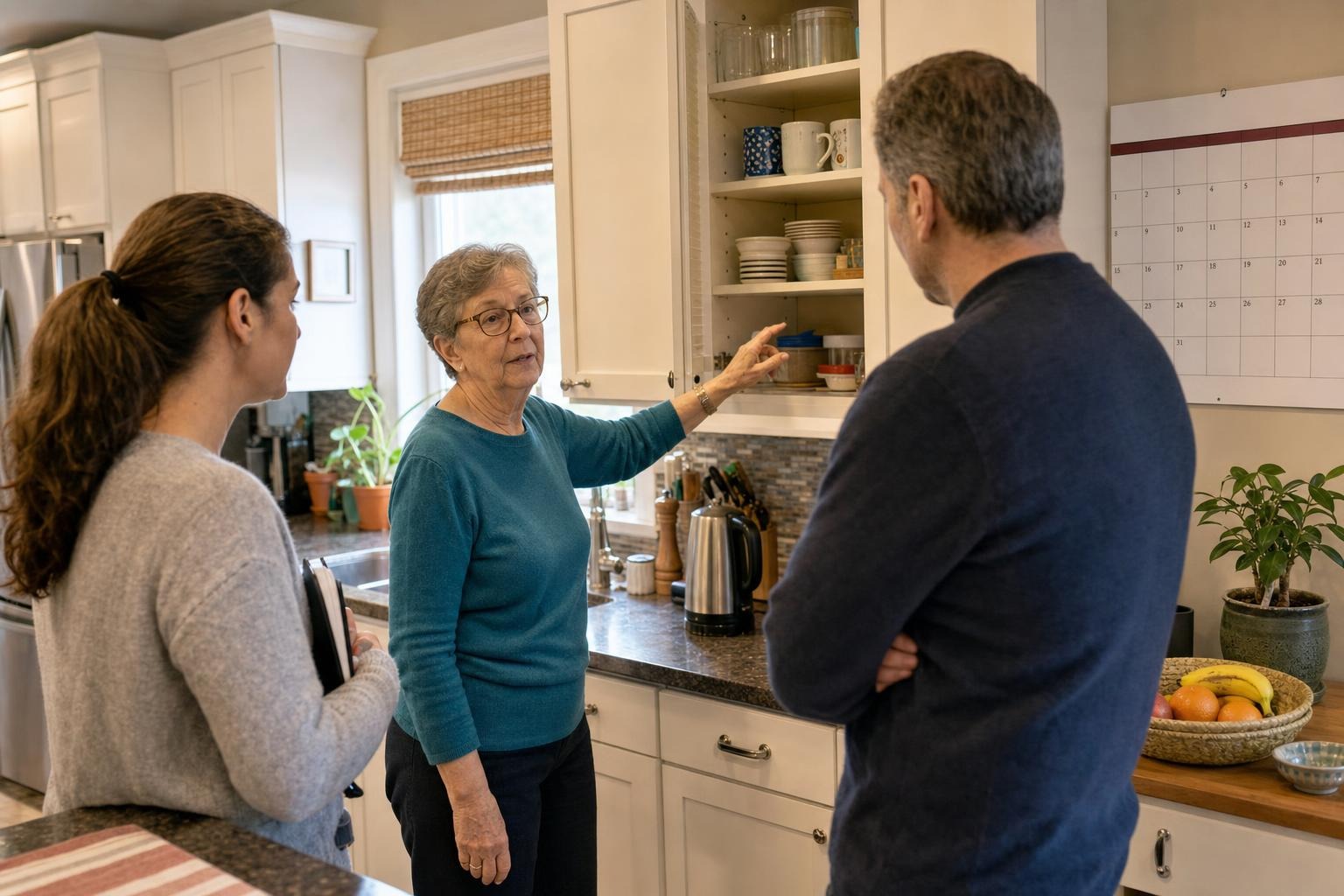
Before support starts, create a short household orientation. It should cover only useful, current information: entry instructions, emergency contacts, agreed tasks, food considerations, mobility or communication preferences, pet routines, and any areas or belongings that are private. Avoid leaving sensitive financial papers, passwords, bank cards, or unnecessary health information accessible.
If possible, have a family member or trusted person present for the introduction, provided the older adult agrees. The aim is not to supervise every interaction. It is to clarify expectations, observe communication, and ensure the worker knows how the home operates.
After the first few visits, review the arrangement with the older adult privately. Ask concrete questions:
- Did the person arrive within the agreed time window?
- Were the planned tasks completed without rushing?
- Did the older adult feel listened to and respected?
- Were household boundaries followed?
- Was the family update accurate and proportionate?
- Is there anything the older adult would like handled differently next time?
Personal fit may take more than one visit to assess. A quiet older adult may prefer someone comfortable with silence; another may value lively conversation. Good support should not erase established routines merely because a different method seems faster.
Document agreed changes rather than allowing instructions to accumulate through scattered texts or verbal messages. A simple current task list reduces confusion, especially when more than one family member communicates with the person providing support.
Recognize when non-medical help is not enough
Non-medical assistance can make everyday life at home more manageable, but it does not replace clinical assessment, nursing, rehabilitation, or emergency response. Families should pause and seek appropriate professional guidance when needs move beyond the agreed scope.
Examples include a new fall, sudden confusion, breathing difficulty, chest pain, a significant change in mobility, trouble swallowing, an unexplained wound, or a rapid decline in the person’s ability to manage daily activities. This is not a complete list, and symptoms should not be diagnosed by a home-help worker or through an online checklist. Call 911 for an emergency; otherwise contact an appropriate regulated health professional or Ontario health service for guidance.
A change in health does not always mean that home support must end. It may mean the plan needs reassessment and coordination with clinical services. The important point is to avoid quietly adding tasks that require different qualifications, oversight, or risk controls.
Review the arrangement after a hospital visit, move, fall, major medication change, change in cognition, or shift in family availability. Even without a major event, a scheduled review every few months can confirm that the task list, schedule, consent, and communication permissions remain current.
Frequently asked questions
What is the difference between non-medical home help and home health care?
Non-medical help focuses on everyday support such as companionship, meal preparation, light home help, and agreed personal support. Home health care involves clinical assessment or treatment delivered by appropriately qualified professionals. The boundaries depend on the task and circumstances, so families should ask for a written scope and consult a health professional when a need may be clinical.
Should an older adult meet the proposed worker before committing?
A meeting or introductory visit can help assess communication style, comfort, and expectations. Ask whether this is available, whether there is a charge, and what happens if the match does not feel right. A pleasant introduction is useful, but it should complement—not replace—screening and operational checks.
Is a vulnerable sector check enough to establish safety?
No single check can guarantee safety. Ask about identity verification, references, relevant experience, supervision, complaint handling, and how concerns are escalated. Families should also protect financial information, monitor unusual changes, and take reports from the older adult seriously.
Can privately arranged help be used alongside publicly funded services?
It may be possible, depending on the person’s needs and eligibility. Families should clarify the role of each service so tasks are not missed or duplicated. Ontario Health atHome can provide information about publicly funded options, while a private provider should explain its own scope and coordination process.
What if the older adult refuses help?
Start by asking why. The concern may involve privacy, loss of control, cost, scheduling, or discomfort with a stranger. Offer choices about tasks and timing, and frame support around the person’s own goals. If refusal occurs alongside concerns about decision-making capacity or immediate safety, seek guidance from an appropriate health or legal professional rather than forcing an informal solution.