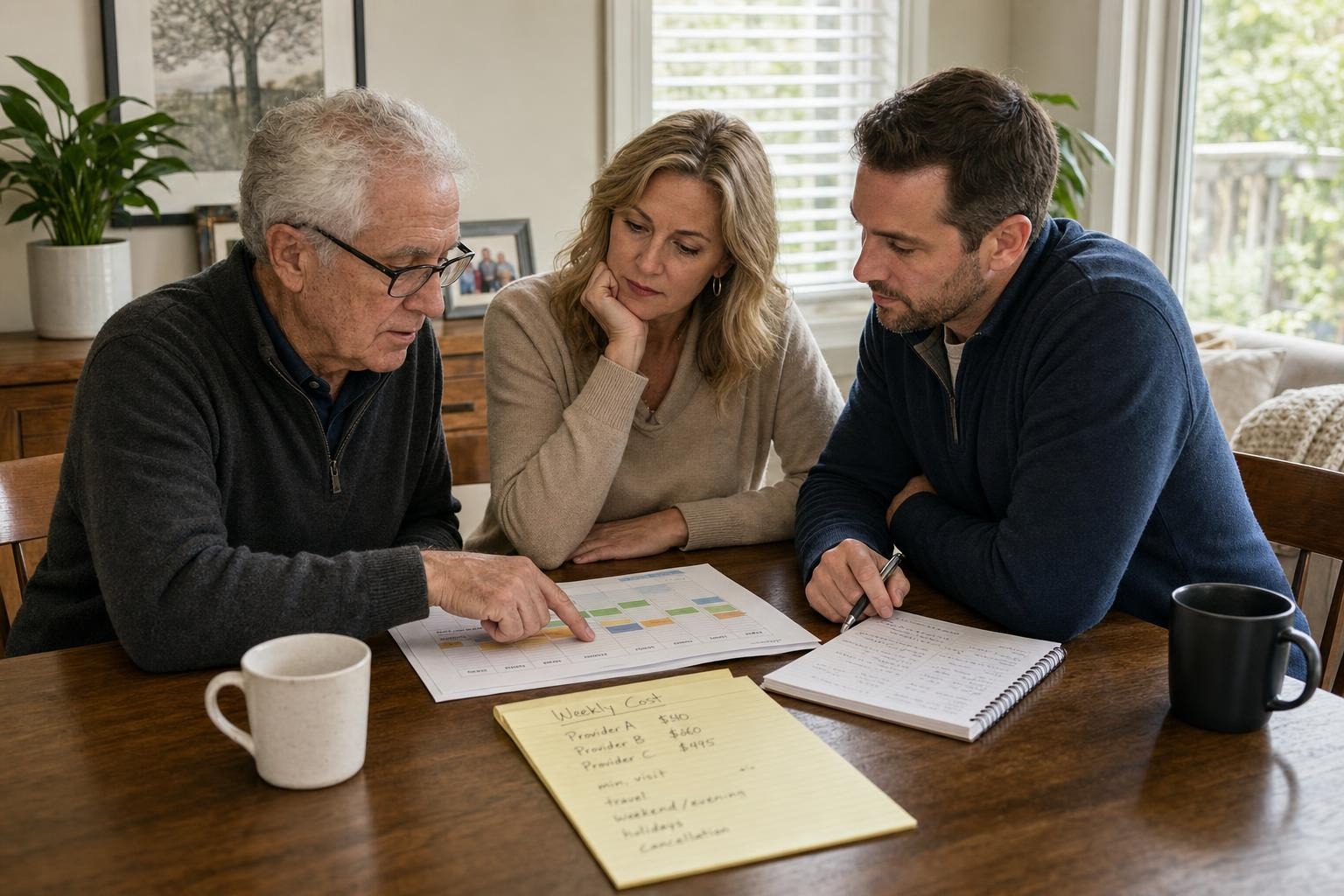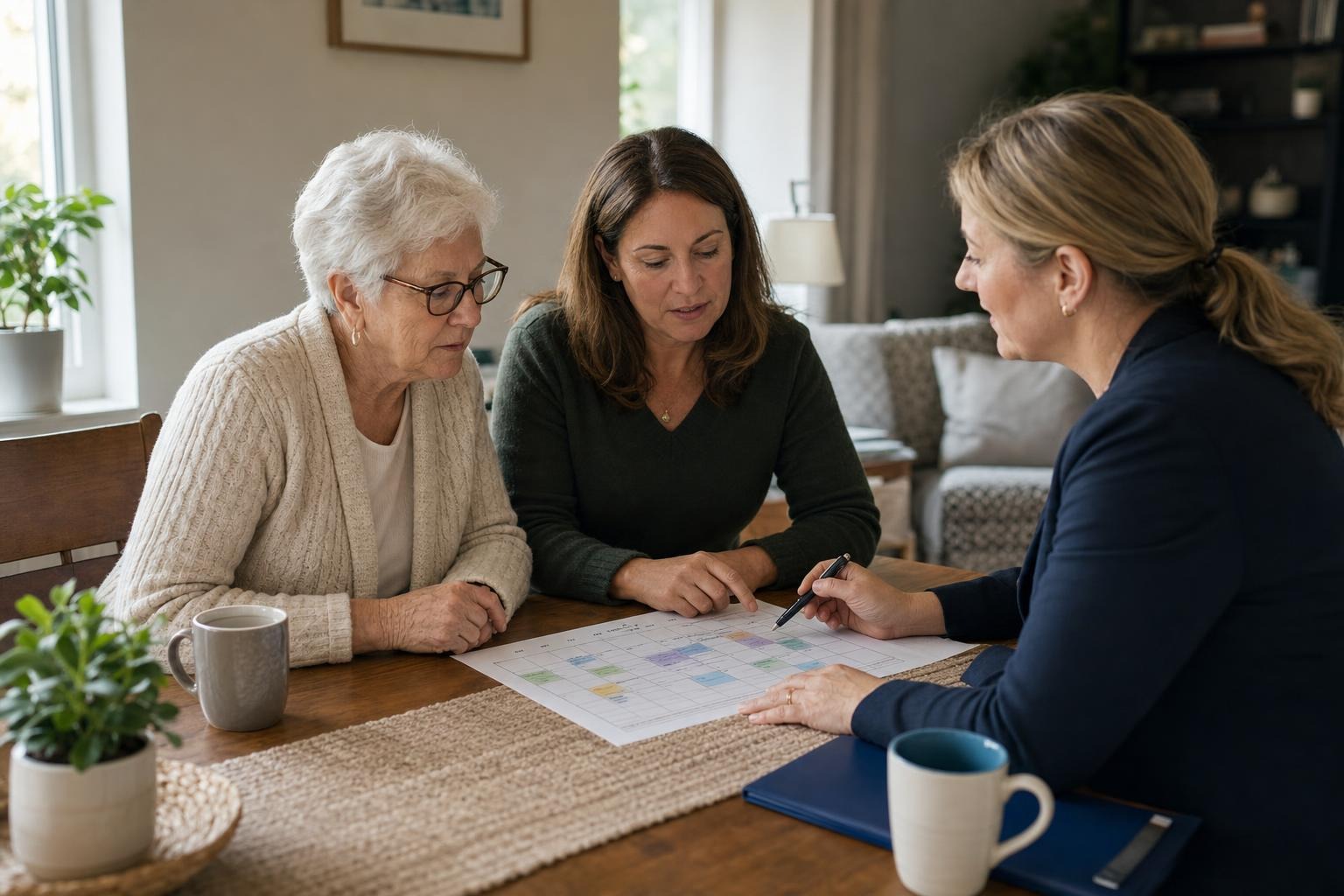

The best way to arrange home support for an older family member is to begin with the parts of daily life that have become difficult—not with a broad service label. Identify what is happening, when help is needed, what the older person wants, and which needs may require a regulated health professional rather than non-medical assistance.
For a Burlington family, that might mean looking closely at weekday mornings, meal routines, household tasks, time spent alone, or the practical strain on a nearby relative. A clear picture of the day makes it easier to discuss dependable support without overlooking the older adult’s preferences or asking one arrangement to solve every problem.
Key takeaways
- Describe specific situations and routines before comparing support options.
- Keep non-medical assistance distinct from nursing, therapy, and other clinical care.
- Include the older adult in decisions and preserve routines that still work well.
- Confirm responsibilities, timing, communication, and backup expectations before support begins.
- Review the arrangement after the first week and whenever health or household circumstances change.
Start with the day, not the service label
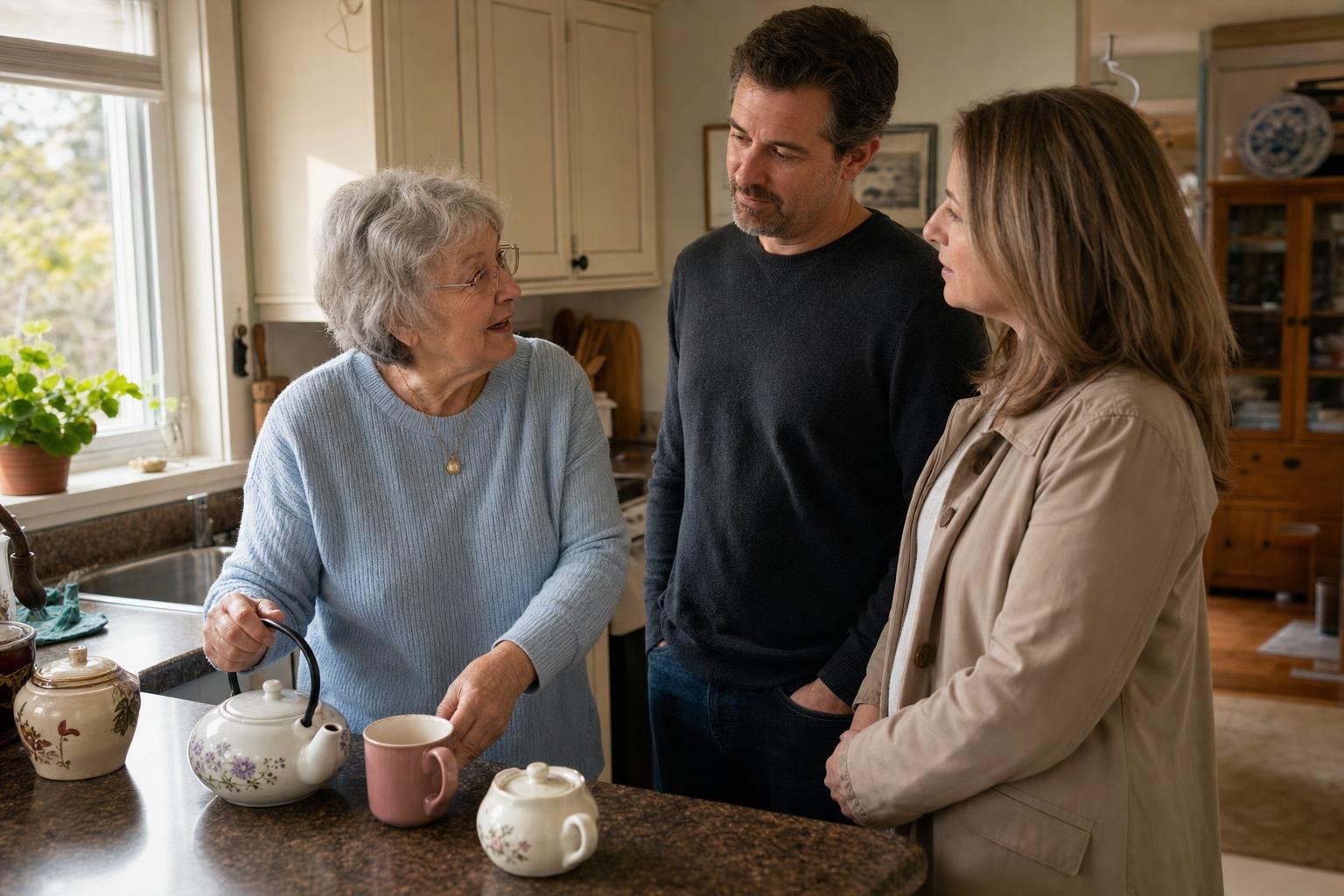
“Needs help at home” is too vague to guide a useful conversation. Replace it with observations tied to particular times and situations.
Consider an older Burlington resident who manages breakfast independently but becomes tired by late afternoon. Her daughter may initially think full-day assistance is necessary. A closer look might show that the pressure points are preparing an evening meal, completing a few household routines, and having another person present during an otherwise isolated part of the day. That description is more useful than a general request for senior care.
A simple assessment can cover four areas:
- What is becoming difficult? Note the activity rather than assigning a diagnosis. Examples could include keeping up with household routines, preparing food, or managing a long stretch of the day alone.
- When does the difficulty occur? A morning challenge may require a different schedule from evening fatigue or occasional family absences.
- What remains independent? Support should not automatically replace abilities and routines that the older adult values and can safely maintain.
- What is the effect on family? Record practical consequences such as missed work, repeated trips across Burlington, or uncertainty about who is checking in.
Speak directly with the older person wherever possible. A plan that appears efficient to adult children may feel intrusive to someone who has managed the same home for decades. Ask what would make the day easier, which routines should remain unchanged, and what kind of presence would feel comfortable.
This needs-first approach also prevents families from buying more time than the situation requires or, conversely, choosing a schedule that leaves the hardest part of the day uncovered.
Separate non-medical support from clinical care
Non-medical in-home support is not a substitute for nursing, medical assessment, rehabilitation, or emergency care. Families should make this distinction early because an older adult may need more than one kind of assistance at the same time.
For example, help keeping the day organized is different from assessing a new symptom. A companionable presence is different from wound care. If a family is unsure whether a task is clinical, it should ask the relevant provider and consult a regulated health professional rather than assume it belongs in a non-medical plan.
Ontario residents can review the province’s home and community care information to understand publicly coordinated services and how assessments work. That pathway can sit alongside privately arranged non-medical support; the appropriate mix depends on the person’s circumstances.
Watch for changes that deserve clinical attention rather than a scheduling adjustment. Sudden confusion, breathing difficulty, chest pain, a serious fall, or an abrupt loss of function should not be treated as an ordinary home-support issue. Seek emergency assistance when required and bring persistent or concerning changes to a qualified health professional.
Families should also avoid assuming that every non-medical provider performs the same duties. Ask directly whether each requested task is within scope. Clear boundaries protect the older adult, the family, and the person providing support.
Build a workable support plan
A useful plan is specific enough to guide the week but flexible enough to reflect real life. It does not need to become a lengthy document. One page covering priorities, schedule, household expectations, and communication can give everyone a common reference point.
Set priorities before setting hours
Divide needs into three categories:
- Essential: Help that must be available at a particular time for the arrangement to work.
- Helpful: Support that would make the day easier but can move to another time.
- Optional: Activities that can be added after the initial routine is established.
This exercise reveals whether the family needs a short, focused period, recurring visits, or a broader discussion. It also helps when budget, availability, or the older person’s tolerance for change limits what can begin immediately.
Map the actual week
Create a seven-day view that includes existing family visits, appointments, community activities, and periods when the older adult is alone. Avoid building a schedule around an idealized week. If a daughter is only reliably available on Sundays, do not assign her an important Tuesday responsibility because she can “usually make it work.”
Consider travel realities as well. A relative commuting from another city may not be an effective backup for a time-sensitive need in Burlington. Local weather, traffic, and seasonal changes can also affect how realistic a family plan is.
Decide how information will move
Determine who should receive routine updates and who makes decisions when circumstances change. Too many parallel messages can create confusion; too little communication leaves relatives wondering whether the plan is working.
Vicaria Care describes its model as personally arranged, non-medical in-home support, with one knowledgeable point of contact and simple digital tools intended to help families retain visibility and control. It is Hamilton-first and also serves Burlington, Oakville, and St. Catharines. Families considering this model can review Vicaria Care’s approach to in-home support while assessing whether personally coordinated assistance fits their situation.
Choose the arrangement, not just the person
A warm first impression matters, but dependable home support also relies on the structure around the relationship. Families should evaluate how needs are understood, how responsibilities are confirmed, and what happens when the original plan no longer fits.
Before agreeing to an arrangement, ask:
- Who is the family’s main point of contact?
- How are the older adult’s preferences gathered and recorded?
- Which requested tasks are included, and which are outside scope?
- What days and times can be arranged?
- How are schedule changes communicated?
- What happens if the usual person is unavailable?
- How should the family raise a concern?
- When will the plan be reviewed?
The answers should be concrete. “We are flexible” is less useful than a clear explanation of who should be contacted and how a requested change is handled.
Compatibility deserves attention too. The right fit is not simply the person an adult child likes most. The older adult may care about conversational style, pace, privacy, language, household customs, or how much direction the person takes. Discuss these preferences without turning them into stereotypes or an impossible wish list.
There are trade-offs. A highly structured routine can provide consistency but may feel rigid. A looser arrangement may preserve spontaneity but create uncertainty for relatives. One family contact can simplify decisions, while shared responsibility may distribute the workload. The goal is not a universally perfect model; it is an arrangement whose compromises are understood and acceptable.
Cost discussions should likewise focus on the complete plan. Families need to know what schedule they are considering and which needs it covers before they can judge affordability. Comparing a single hourly figure without comparing scope, timing, and coordination can produce a misleading result.
Prepare for the first week at home
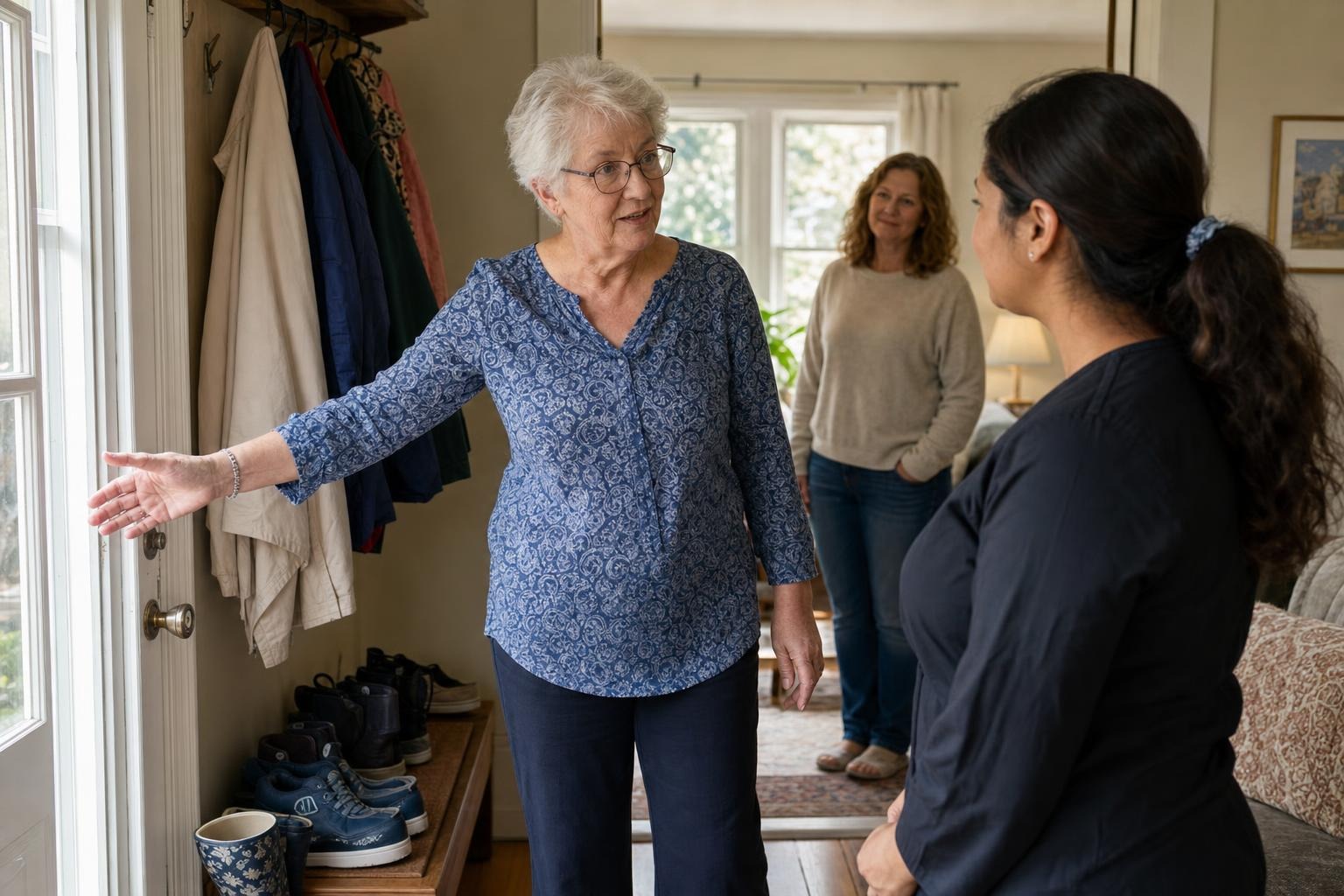
Even a thoughtfully chosen arrangement can feel unfamiliar at first. Treat the opening week as an orientation period rather than expecting an effortless routine on day one.
Walk through the home with the older adult’s participation. Explain household preferences, rooms or possessions that are private, and the normal rhythm of the visit. Confirm practical details such as entry, where coats and outdoor footwear belong, and whom to contact if no one answers the door.
Keep the first priorities manageable. Trying to address every concern immediately can make the visit feel task-heavy and prevent the older person and support person from developing a comfortable working rhythm. Begin with the needs that prompted the arrangement, then consider additions during the first review.
Family members should avoid giving conflicting instructions. Choose one person to consolidate questions unless an urgent situation requires otherwise. If several relatives want updates, agree on how those updates will be shared within the family rather than asking the older adult or support person to repeat the same information multiple times.
At the end of the first week, ask three separate questions: Did the necessary help occur? Did the timing make sense? Did the older adult feel respected and comfortable? A plan can succeed on tasks but fail on experience, or feel pleasant without covering the original need. Both dimensions matter.
Review the plan as needs change
Home support should be reviewed, not placed on autopilot. The first check can happen after the initial week, followed by periodic reviews that fit the stability of the situation.
Look for observable evidence. Is the difficult part of the day becoming more manageable? Are family members making fewer unplanned trips? Does the older adult feel that support is useful without taking over? Are visits occurring at the times when help is actually needed?
A review may lead to a small timing change rather than more support. If the hardest period has shifted from afternoon to evening, moving the schedule could be more useful than adding hours. Conversely, repeated workarounds, frequent missed needs, or growing family strain may show that the current arrangement is too limited.
Health changes require a separate response. When new symptoms, falls, cognitive changes, or reduced function appear, contact an appropriate health professional and reassess whether non-medical assistance remains sufficient as one part of the overall plan.
Record the reason for each change. This gives the family a clearer history and prevents the schedule from expanding through a series of temporary requests that are never reconsidered.
Frequently asked questions
How soon should a family start discussing support?
Start when recurring difficulties appear, not only after a crisis. Early conversations leave more room for the older adult to express preferences and allow the family to begin with focused help. If there is an immediate safety or medical concern, contact the appropriate emergency or health service rather than waiting for a non-medical arrangement.
What should we prepare for an initial conversation?
Bring a concise description of the difficult situations, the days and times involved, the older adult’s preferences, existing family involvement, and any questions about task boundaries. You do not need to diagnose the problem. Specific observations are more useful than a broad statement that the person is “slowing down.”
Should the older adult be part of the decision?
Yes, whenever possible. The home belongs to the person receiving support, and the arrangement affects daily autonomy, privacy, and routine. If decision-making is complicated, families should seek appropriate professional guidance while continuing to involve the older adult to the greatest extent possible.
Can non-medical support be used alongside public home care?
Potentially. Publicly coordinated health or personal care services and privately arranged non-medical assistance may address different needs. Families should confirm each provider’s role so that important tasks are covered without relying on assumptions or creating unnecessary duplication.
What if the older person resists help?
Ask what specifically feels uncomfortable. The concern may be loss of privacy, unfamiliar people, an unsuitable schedule, or fear that accepting help means losing independence. A smaller, clearly defined arrangement may feel more acceptable than a broad proposal. Avoid presenting support as a decision already made unless urgent legal or safety circumstances require professional intervention.
How do we know whether the arrangement is working?
Return to the original problem. If the plan was intended to ease a difficult evening routine, evaluate that period rather than relying only on general impressions. Combine practical observations with the older adult’s experience, family strain, reliability, and any concerns about scope or communication.