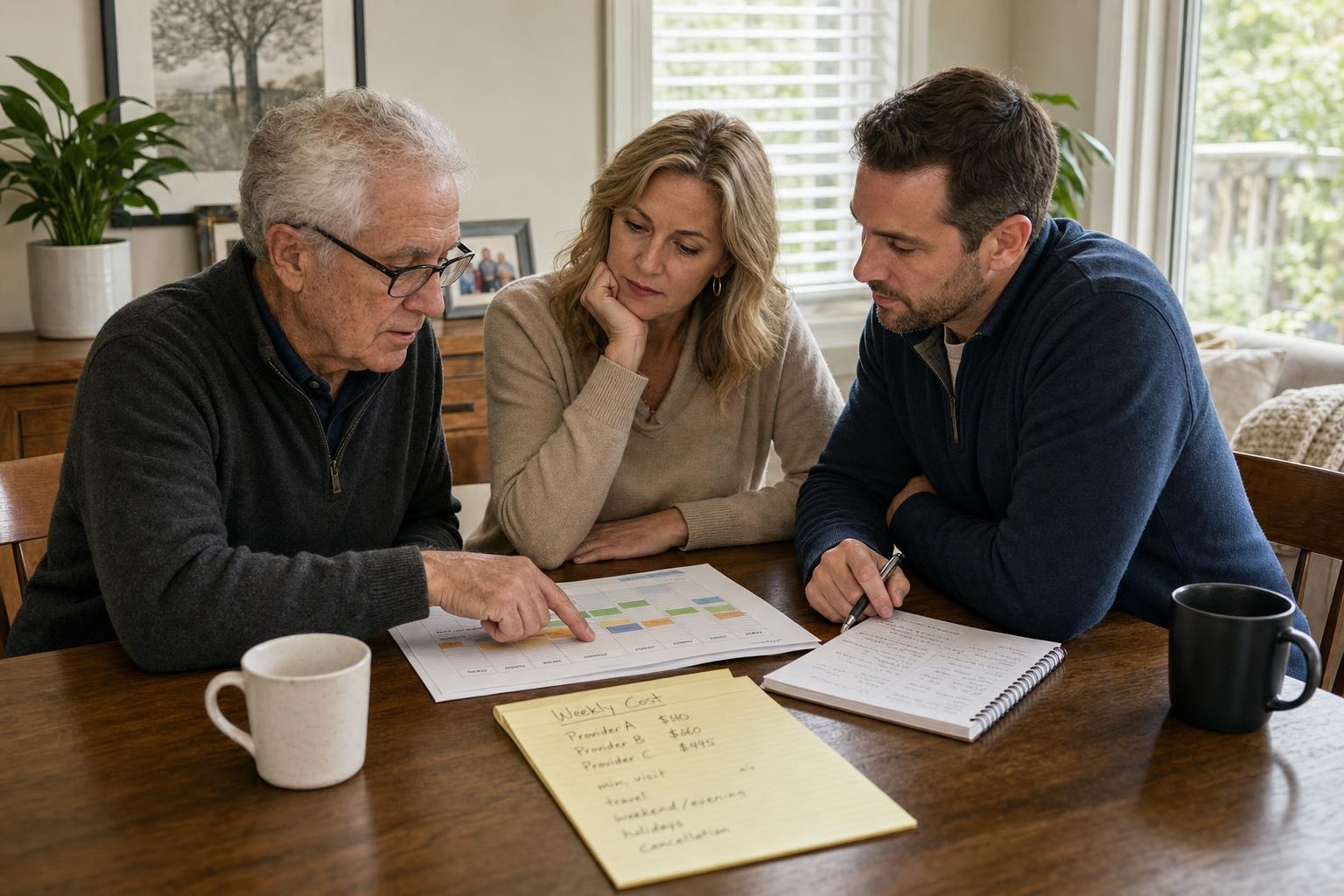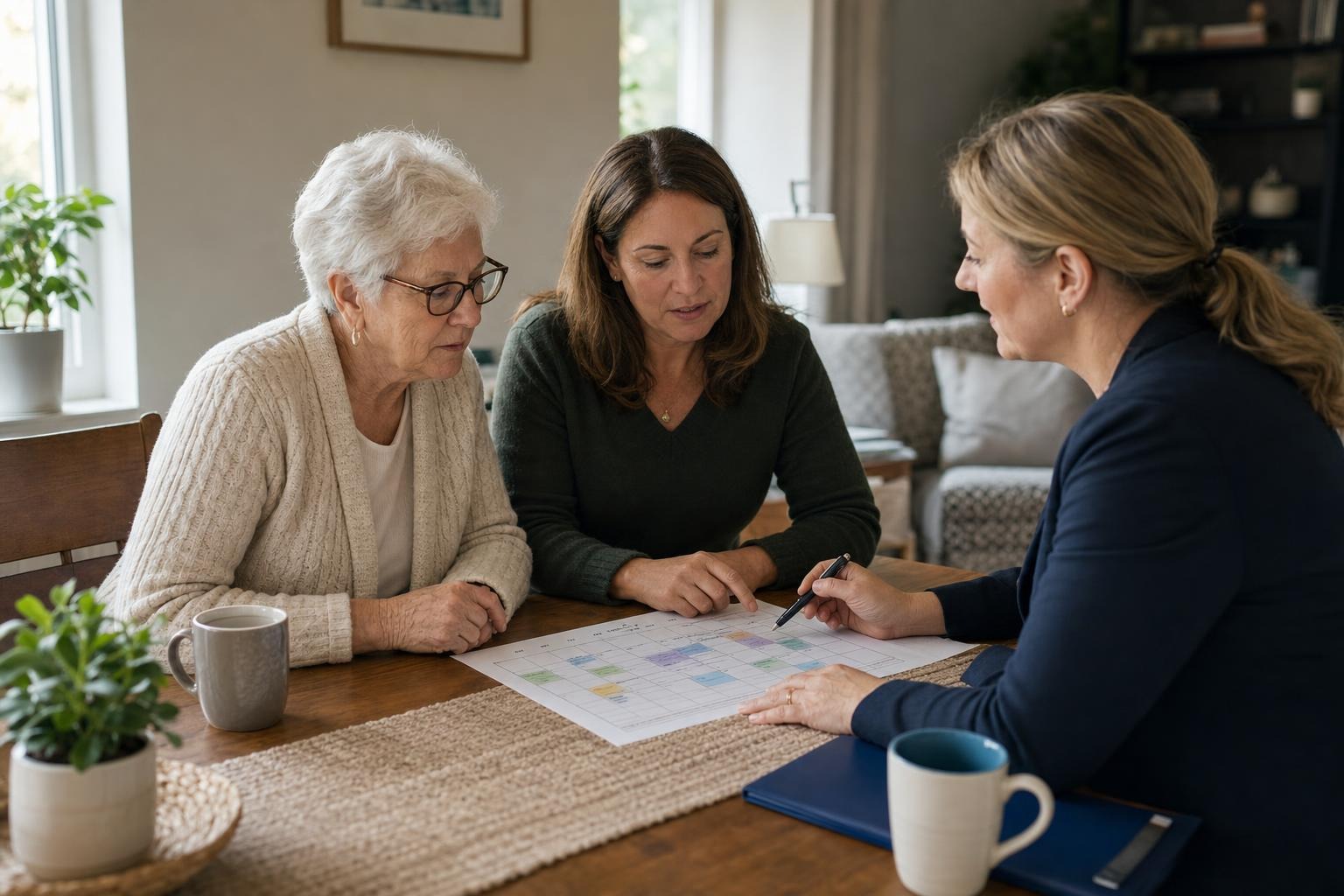

A care concierge helps a family turn a broad concern—“life at home is getting harder”—into a clearer, workable plan for non-medical support. Instead of asking relatives to interpret directories or coordinate arrangements separately, the family has one knowledgeable point of contact who listens, clarifies day-to-day needs, and helps move the process forward.
That role can be especially useful when an older adult wants to remain at home but the family is unsure what practical help would make the greatest difference. The concierge does not replace physicians, nurses, emergency services, or regulated clinical care. The value lies in personally arranging appropriate non-medical support while helping the older adult and family retain visibility and control.
For families in Hamilton, with service also available in Burlington, Oakville, and St. Catharines, Vicaria Care offers this human-guided approach to arranging in-home support.
Key takeaways
- A concierge starts by understanding the older adult’s daily situation rather than applying a standard service label.
- One consistent contact can make communication more manageable when several relatives are involved.
- Personally arranged support should reflect the older adult’s routines, preferences, household context, and changing needs.
- Non-medical support is distinct from diagnosis, treatment, nursing, and emergency response.
- Families should clarify scope, communication, scheduling, costs, and how changing circumstances will be handled before support begins.
What a care concierge does
The concierge is the family’s central contact for understanding and arranging practical in-home support. The process begins with conversation: What has become difficult? What does the older adult want to preserve? Which parts of the day concern the family? What would make home life feel easier without taking away the person’s independence?
Consider an older adult in Hamilton who is generally comfortable at home, while their adult children have noticed that daily routines are becoming less consistent. One child thinks regular support is needed immediately. Another believes occasional assistance would be sufficient. The older adult is wary of losing control over the household.
A useful concierge conversation does not begin by deciding which relative is correct. It separates observations from assumptions, identifies the practical concerns shared by the family, and keeps the older adult’s preferences central. The resulting arrangement can then be based on the actual situation rather than on a generic idea of what senior care should look like.
This role also helps families distinguish between a clearly defined concern and a service request that is still too vague. “Dad needs help” does not provide enough direction. A discussion of which routines are difficult, when those difficulties occur, and what kind of presence would feel acceptable creates a more useful foundation.
The concierge should not make medical judgments. If the conversation reveals symptoms, safety concerns, or needs that may require clinical assessment, those matters belong with an appropriate regulated health professional or emergency service. The concierge’s role remains focused on non-medical support.
How personally arranged support works
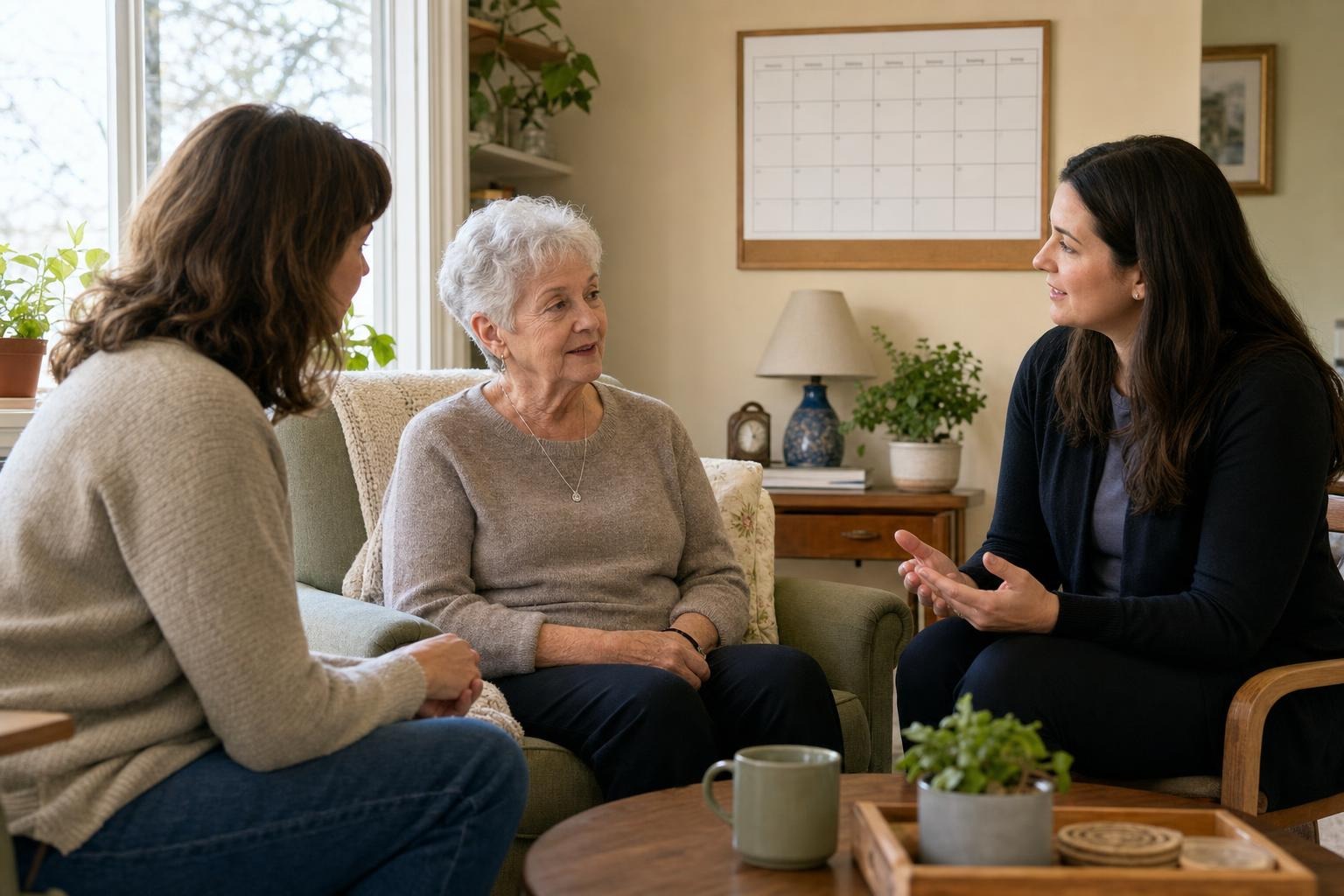
Personally arranged support starts with the need, not a fixed package. Although every family’s circumstances differ, the process can be understood in four stages.
1. Listening to the older adult and family
The first task is to understand the household as it actually operates. That includes the older adult’s routines and preferences, the concerns noticed by relatives, and the practical realities of the home. The conversation should also identify who is involved in decisions and how the older adult wants family members to participate.
This step matters because relatives may see only part of the picture. A local family member may notice day-to-day changes, while a sibling living farther away may focus on updates received by phone. Neither perspective is necessarily complete. Bringing those observations together can produce a more accurate account without treating normal differences of opinion as a crisis.
2. Clarifying the support need
The concierge helps convert general concern into specific priorities. Families might need to decide whether the central issue is maintaining a steadier routine, having dependable practical support at particular times, or reducing the amount of informal coordination falling on one relative.
Clarity also helps prevent over-arranging. An older adult may need a modest amount of assistance rather than broad intervention. Conversely, a concern that initially appears simple may need to be referred to a health professional if it falls outside non-medical support.
3. Arranging a practical plan
Once priorities are understood, support can be thoughtfully arranged around day-to-day life. The plan should be understandable to the older adult and the relatives involved. It should establish what is being arranged, when it is expected, and how questions or changes will be communicated.
The goal is not to eliminate the older adult’s choices. It is to create dependable support without unnecessarily disrupting familiar routines. A plan that looks efficient to the family may still be unsuitable if it ignores how the person prefers to live at home.
4. Keeping the family informed
Simple digital tools can support visibility, but they should not replace human guidance. Families often need both: a clear way to follow arrangements and a person who understands the situation when a question cannot be resolved through a schedule or status update.
The concierge remains a point of continuity. That is important because in-home support is rarely a one-time administrative task. Family availability, preferences, and practical needs can change.
Why one point of contact can reduce family strain
Arranging support can feel like a second job. A family may be gathering observations, discussing options with siblings, responding to an older parent’s concerns, and trying to determine what can realistically be handled by relatives. Without a central contact, the same information may be repeated several times, and decisions can become scattered across messages and phone calls.
A concierge can reduce that fragmentation by giving the family one place to bring questions and updated information. This does not mean one person takes control away from the older adult or makes every decision for the family. It means the coordination has a defined centre.
That distinction is valuable when family members have different roles. One sibling may live nearby, another may manage most phone communication, and a third may be available only on certain days. A shared understanding of what has been arranged helps prevent one relative from becoming the unofficial coordinator by default.
One contact can also make disagreements easier to frame. Instead of debating whether an older adult “needs care,” the family can discuss narrower questions: Which parts of the week are difficult? What support would be acceptable? Which concerns are non-medical, and which should be raised with a health professional?
The concierge cannot remove every emotional difficulty. Conversations about accepting help may involve privacy, independence, family history, and uncertainty about the future. A well-managed process can, however, keep those conversations connected to concrete needs and the older adult’s stated preferences.
What non-medical in-home support can and cannot do
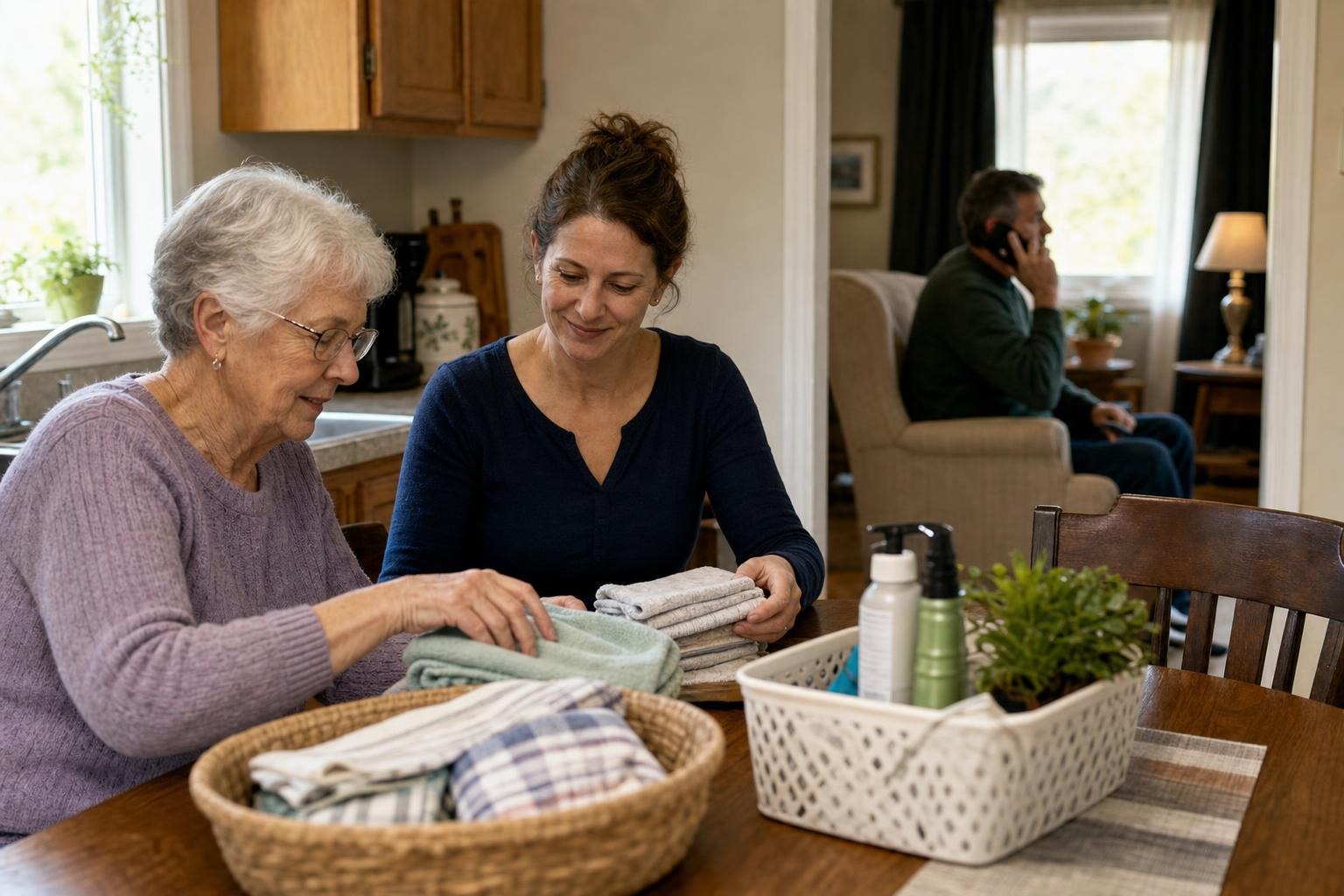
Non-medical support is intended to make everyday life at home more manageable. It can provide practical assistance and dependable human support arranged around the household’s needs. Its purpose is not to diagnose conditions or deliver regulated health care.
That boundary should be explicit from the start. Non-medical support does not replace a physician, nurse, pharmacist, physiotherapist, occupational therapist, or emergency responder. It should not be presented as treatment, medical monitoring, or a guarantee that an older adult can remain safely at home regardless of their condition.
Ontario families may encounter both publicly funded health services and privately arranged non-medical support. The Government of Ontario’s overview of home and community care explains how eligible health care and related services may be delivered at home or in the community. A family may use more than one type of support, but each provider’s role and limits should remain clear.
The distinction becomes especially important when circumstances change. New symptoms, sudden confusion, a fall, breathing difficulty, severe pain, or another urgent health concern should not be treated as a routine scheduling issue. Families should seek direction from an appropriate health professional or emergency service based on the situation.
A concierge can help keep the non-medical arrangement organized, but clinical decisions must stay with qualified professionals. Clear boundaries protect the older adult, the family, and the people providing support.
Questions to ask before support is arranged
A family does not need to know every detail before the first conversation. It should, however, ask enough questions to understand what is being offered and whether the process fits the household.
How will you learn about our situation?
Look for a process that includes the older adult’s preferences, not only the concerns reported by relatives. Ask who should participate in the initial discussion and how conflicting views will be handled.
What is included—and excluded?
Request a clear explanation of the non-medical scope. If the older adult has health-related requirements, ask which needs must be addressed by regulated professionals rather than assuming they can be incorporated into an in-home support arrangement.
Who will be our ongoing contact?
Find out whether the family will have a consistent person to contact when circumstances change. Also clarify how routine updates and time-sensitive concerns are handled.
How is the arrangement explained to the older adult?
The person receiving support should understand what has been planned and have an opportunity to express preferences. If the older adult has a substitute decision-maker or another formal arrangement, the family should obtain appropriate professional guidance about decision-making responsibilities rather than relying on general assumptions.
What practical details will be confirmed?
Ask how schedules, costs, changes, cancellations, privacy expectations, and household access will be communicated. Families should receive clear information relevant to their own arrangement before agreeing to proceed.
How will changing needs be recognized?
A useful plan includes a way to revisit what is working. Ask what happens if family availability changes, the older adult dislikes part of the arrangement, or the need appears to move beyond non-medical support.
Planning when relatives live in different communities
Geography often shapes family coordination. An older adult may live in Hamilton while adult children are in Burlington or Oakville. Another relative may be in St. Catharines and able to visit less often. Even across relatively nearby communities, work schedules and travel can make informal support difficult to coordinate consistently.
The family should first decide who needs which information. Constant updates to every relative can create noise rather than reassurance. A more workable structure may identify one or two family contacts while establishing how significant changes will be shared with others, subject to the older adult’s wishes and privacy.
Relatives should also avoid equating distance with lack of involvement. A person who lives farther away may be able to take part in planning conversations, maintain regular contact with the older adult, or help organize family discussions. The local relative should not automatically carry every practical and communication task.
A concierge can provide continuity across these different levels of involvement. The benefit is not simply convenience; it is a clearer line between family participation and the actual arrangement of dependable in-home support.
What happens when needs change
A support plan should be treated as a practical arrangement that can be reviewed, not a permanent prediction. Older adults’ preferences may change after they experience support at home. Family members may become more or less available. A routine that worked in winter may not fit summer activities or appointments.
Review does not always mean increasing support. The right adjustment could involve changing timing, clarifying expectations, or simplifying communication. The question is whether the arrangement still addresses the needs that led the family to seek help.
Changes that suggest a medical or safety issue require a different response. A concierge should not interpret symptoms or determine whether a health condition has progressed. Families should bring health concerns to qualified professionals. In an emergency, they should use emergency services rather than waiting for a routine care discussion.
Families may find it useful to note observable changes in neutral language. “She has stopped answering calls at the usual time” is more useful than “She cannot cope anymore.” Specific observations help the appropriate professional or support contact understand what has changed without turning a family impression into a diagnosis.
A practical next step for families
Before speaking with a concierge, family members can prepare a short, factual picture of the current situation. Note what the older adult says would make life easier, which daily circumstances have prompted concern, who is currently helping, and where the greatest coordination burden falls.
Keep the first goal narrow. It may be enough to understand whether personally arranged non-medical support fits the current need. Families do not have to solve every possible future scenario in one conversation.
Most importantly, include the older adult wherever possible. Support at home is more likely to fit when the person receiving it is treated as a participant rather than the subject of a plan developed elsewhere. The aim is thoughtful assistance that respects the household, preserves choice, and gives the family a clearer way to move forward.
Frequently asked questions
Is a care concierge a medical professional?
Not necessarily. In this context, the concierge coordinates personally arranged, non-medical in-home support. Medical assessment, diagnosis, treatment, and regulated clinical services must be provided by appropriately qualified professionals.
Does using a concierge mean giving up family control?
No. The purpose is to help the older adult and family understand needs and arrange support while retaining visibility and involvement. The older adult’s preferences should remain central, subject to any applicable legal decision-making arrangements.
Is this approach only for people with extensive needs?
No. A family may seek help because a limited part of daily life has become harder to coordinate. The appropriate level of support depends on the actual situation, not a broad label or assumption based on age.
Can non-medical support be used alongside publicly funded home care?
Different forms of support may coexist when their roles are clearly defined. Eligibility for publicly funded services and decisions about clinical care belong with the relevant Ontario health system organizations and qualified professionals.
What if the family is unsure whether the need is medical?
Describe the concern factually and ask an appropriate regulated health professional for guidance. A non-medical provider should be transparent about its limits and should not diagnose symptoms or present practical support as a substitute for health care.
Where is Vicaria Care available?
Vicaria Care is Hamilton-first and also serves families in Burlington, Oakville, and St. Catharines. Its approved scope is personally arranged, non-medical in-home support for families with older members who need special attention.